Digital interaction has come a long way from the static web pages of the early internet. We moved to dynamic, mobile-first interfaces, and now we stand at the threshold of the next great leap: immersive environments. In 2026, Augmented Reality (AR) and Virtual Reality (VR) are no longer futuristic concepts from science fiction. They are here, actively redefining how we interact with digital content, products, and each other.
These immersive technologies are fundamentally altering user expectations. AR overlays digital information onto our physical world, while VR transports us to entirely new digital realms. This guide will explore how AR VR is changing digital experience, creating more engaging, intuitive, and impactful interactions. We’ll examine the technology, its applications across major industries in the USA, and what the future holds for this exciting frontier.
This article will cover:
- The core differences between AR and VR.
- How immersive tech transforms user engagement.
- Real-world examples from retail, healthcare, and more.
- Future AR VR technology trends shaping our digital world.
- Practical steps for businesses to adopt these technologies.
Quick Overview
Augmented Reality (AR) and Virtual Reality (VR) are transforming digital experiences by shifting from flat, 2D interfaces to immersive, 3D interactions. AR enhances the real world with digital overlays, while VR creates fully simulated environments. These technologies are driving deeper user engagement, enabling virtual product try-ons, and offering realistic training simulations across industries like retail, healthcare, and education.
Table of Contents
- Understanding AR and VR Technology
- How AR VR Is Transforming Digital User Experience
- Industries Being Transformed by AR and VR
- Real-Life Examples of AR and VR Digital Experiences
- Benefits of AR VR in Digital Experiences
- Challenges and Limitations of AR and VR Technology
- AR vs VR: Key Differences in Digital Experience
- Common Mistakes Businesses Make with AR VR Experiences
- Future AR VR Technology Trends Shaping Digital Experiences
- How Businesses Can Start Using AR and VR Today
- Conclusion: The Future of Digital Experience Is Immersive
- FAQs About AR and VR Digital Experiences
Understanding AR and VR Technology
To grasp how AR and VR are changing the digital landscape, it’s crucial to understand what they are and how they differ. Though often grouped together, they offer distinct experiences. One enhances your current reality, while the other replaces it entirely.
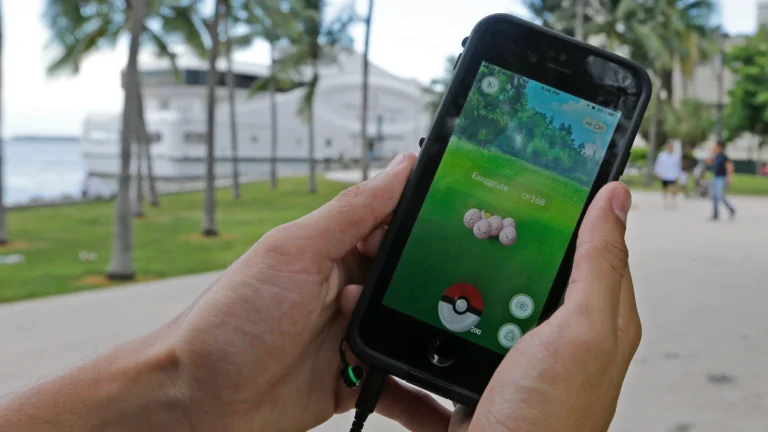
Augmented Reality (AR) overlays computer-generated images, sounds, and information onto the real world. It doesn’t transport you elsewhere; it enriches the environment you’re already in. The most common way to experience AR is through the camera on your smartphone. Think of Pokémon GO, or using the IKEA Place app to see how a virtual chair would look in your living room. The augmented reality digital experience is about blending the digital and physical.
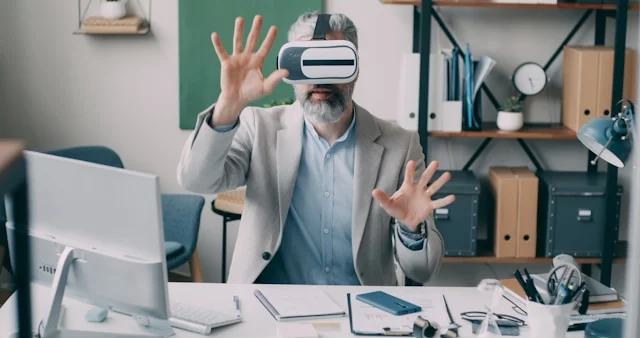
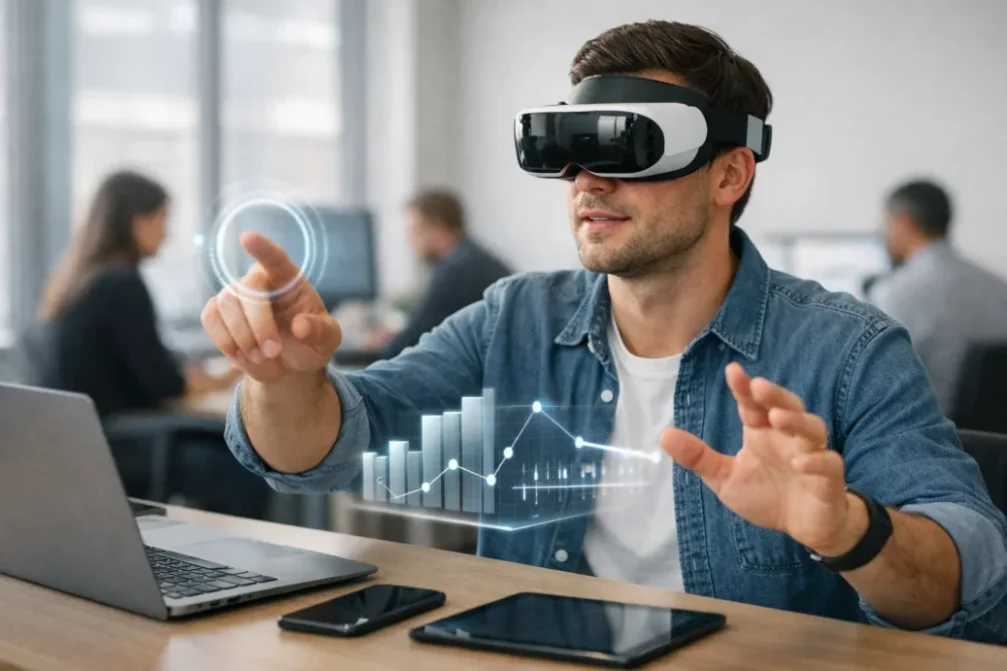
Virtual Reality (VR), on the other hand, creates a completely immersive, artificial environment. When you put on a VR headset, you are transported to a new digital world, shutting out your physical surroundings. This provides a powerful, focused virtual reality user experience. VR is powered by devices like the Meta Quest or PlayStation VR, which track your head and body movements to allow you to interact with the virtual space.
These technologies are powered by advancements in spatial computing, computer vision, and AI. Spatial computing allows devices to understand and map the physical world, while AI helps render realistic digital objects and interactions in real time.
How AR VR Is Transforming Digital User Experience
Immersive technologies are moving us beyond clicks and swipes into a new era of interaction. They are fundamentally changing the user experience by making it more intuitive, engaging, and personal. Instead of passively consuming content on a flat screen, users can now step inside it.
From Passive Content to Immersive Interaction
Traditionally, we view content. With AR and VR, we experience it. A 2D picture of a car becomes a 3D model you can walk around and sit inside. A text-based history lesson becomes a virtual tour of ancient Rome. This shift from passive observation to active participation creates a much deeper and more memorable connection with the content.
Increased User Engagement and Retention
Because immersive experiences are so novel and interactive, they capture user attention far more effectively than traditional media. A brand that offers a virtual try-on for sunglasses or an AR game is more likely to hold a user’s interest. In my experience, this heightened engagement translates directly into better retention rates and stronger brand recall. Users don’t just see the product; they play with it.
This transformation allows for incredibly personalized experiences. An AR app can show you furniture scaled perfectly to your room’s dimensions. A VR training module can adapt to your performance, offering customized feedback. This level of personalization makes the digital experience feel less generic and more like a one-on-one consultation.
Industries Being Transformed by AR and VR
The impact of AR and VR is not a far-off prediction; it’s happening now across a wide range of industries. Companies are leveraging these technologies to solve real-world problems, improve efficiency, and create groundbreaking customer experiences. These AR VR technology trends are reshaping business models.
Retail & eCommerce: This is one of the most visible sectors. Virtual try-on features from brands like Warby Parker allow customers to see how glasses look on their face using their phone’s camera. Product visualization lets you place a 3D model of a sofa or TV in your home to check its size and style, drastically reducing purchase uncertainty and return rates.
Education: Immersive learning is making education more engaging. Medical students can practice complex surgical procedures in a risk-free VR environment. History students can witness historical events firsthand. AR apps can bring textbook diagrams to life as interactive 3D models on a student’s desk.
Healthcare: Beyond training, VR is used for therapy, helping patients manage pain or overcome phobias in controlled virtual settings. Surgeons use AR to overlay patient scans onto their body during an operation, providing a kind of real-time, digital x-ray vision for incredible precision.
Real Estate: The days of relying solely on photos are over. Virtual property tours allow potential buyers from anywhere in the world to walk through a home as if they were there. This saves time for both buyers and agents and provides a much better sense of the space.
Real-Life Examples of AR and VR Digital Experiences
The theoretical benefits of AR and VR become clear when you look at how leading companies are applying them today. These examples show how immersive tech can create tangible value and delight users.
One of the best-known AR shopping apps is IKEA Place. It solves a simple but significant problem: “Will this furniture fit and look good in my home?” By allowing users to place true-to-scale 3D models of furniture in their own rooms, IKEA removes a major barrier to online purchasing.
In gaming, VR platforms like the Meta Quest Store offer fully immersive experiences that are simply not possible on a 2D screen. Games like Beat Saber have become cultural phenomena, demonstrating the mainstream appeal of active, physical gameplay that makes you feel like you are inside the game.
Museums and cultural institutions are also embracing immersive tech. The Louvre offers VR experiences that let visitors get up close with the Mona Lisa without the crowds. These digital exhibitions make art more accessible and provide deeper context through interactive storytelling.
Even navigation is being enhanced. Google Maps’ AR feature, Live View, overlays walking directions onto your real-world view through your phone’s camera, making it much easier to find your way in a complex urban environment.
Benefits of AR VR in Digital Experiences
Companies are not just adopting AR and VR because they are new and exciting. They are investing heavily because these technologies deliver significant, measurable benefits that impact the bottom line and build stronger customer relationships.
The primary benefit is a dramatic increase in user engagement. Interactive, 3D experiences are more captivating than static content, leading to longer session times and higher interaction rates. This heightened engagement leads to better product visualization. Customers can understand a product’s features, scale, and utility in a way that photos or videos cannot match.
This improved understanding directly impacts customer decision-making. A customer who has “tried on” a watch using AR or “walked through” a virtual hotel room feels more confident in their choice. For eCommerce businesses, this confidence translates into a measurable reduction in product return rates, which is a major operational cost.
Ultimately, AR and VR create memorable brand experiences. A company that uses this technology effectively positions itself as innovative and customer-focused, building a competitive advantage that is difficult to replicate.
Challenges and Limitations of AR and VR Technology
Despite the immense potential, the path to widespread adoption is not without its obstacles. Several challenges and limitations still need to be addressed before AR and VR become as ubiquitous as smartphones.
The high cost of hardware remains a significant barrier, particularly for high-end VR. While devices like the Meta Quest have become more affordable, premium headsets can still cost thousands of dollars. Similarly, the availability of powerful AR-enabled smart glasses is still limited for the average consumer.
There is also the issue of technical complexity and user comfort. Some users experience motion sickness or discomfort during prolonged VR sessions. The development of high-quality, seamless immersive experiences is also costly and requires specialized skills, putting it out of reach for some smaller businesses.
Privacy is another growing concern. AR and VR devices, especially those with always-on cameras and sensors, collect vast amounts of data about users and their environments. Establishing clear guidelines and robust security measures to protect this data is essential for building user trust.
AR vs VR: Key Differences in Digital Experience
To choose the right technology for a specific goal, it is vital to understand the fundamental differences between the augmented reality digital experience and the virtual reality user experience.
Feature | Augmented Reality (AR) | Virtual Reality (VR) |
|---|---|---|
Immersion Level | Partial immersion; blends digital with the real world. | Full immersion; replaces the real world. |
Hardware | Primarily smartphones; some smart glasses. | Requires a dedicated headset (e.g., Meta Quest, PSVR). |
User Accessibility | High; most people own a compatible smartphone. | Lower; requires purchasing specialized hardware. |
Real-World Link | Directly connected to and interacts with the user’s physical environment. | Completely detached from the user’s physical environment. |
Common Use Cases | Virtual try-ons, product visualization, navigation, interactive info. | Gaming, simulations, training, virtual events, social platforms. |
Cost & Scalability | Generally lower cost to develop and easier to scale to a wide audience. | Higher development and hardware costs; scaling is more limited. |
In a practical scenario, a furniture retailer would likely choose AR to let customers see products in their own homes. A company training pilots, however, would choose VR to create a safe, fully controlled flight simulator.
Common Mistakes Businesses Make with AR VR Experiences
As with any emerging technology, there is a learning curve. Many businesses, in their rush to innovate, make common mistakes that undermine the effectiveness of their AR and VR initiatives.
The biggest mistake is prioritizing technology over the user experience. Some brands create an AR feature simply for the sake of having one, without considering if it adds real value. A gimmick will only hold a user’s attention briefly. The experience must solve a problem or provide genuine utility or entertainment.
Poor UX design is another pitfall. An AR interface that is clunky, slow, or difficult to use will frustrate users and cause them to abandon the experience. Performance is key. An AR overlay that lags or a VR environment with a low frame rate can be jarring and even cause motion sickness.
Finally, many businesses fail to properly test their immersive experiences with real users. Usability testing is crucial to identify pain points and ensure the experience is intuitive and enjoyable. Ignoring mobile compatibility for AR is another common error, as the vast majority of users will access it through their phones.
Future AR VR Technology Trends Shaping Digital Experiences
The evolution of immersive technology is accelerating. Looking ahead to 2030, several key AR VR technology trends are poised to make these experiences even more seamless, powerful, and integrated into our daily lives.
AI-powered immersive experiences will become standard. AI will enable more realistic and responsive virtual characters, generate dynamic content in real-time, and create deeply personalized experiences based on user behavior.
The push toward lightweight, stylish AR glasses continues. The ultimate goal for many in the industry is to create a pair of glasses that can replace the smartphone as our primary interface for digital information. This will make the augmented reality digital experience a constant, seamless part of our perception.
The metaverse, or interconnected virtual worlds, will continue to develop, offering persistent spaces for work, socializing, and entertainment. Technologies like haptic feedback, which allows you to “feel” virtual objects, will make the virtual reality user experience incredibly realistic and tactile. The rise of spatial computing will create a new paradigm for interfaces, moving beyond screens to interactions based on gestures, voice, and gaze.
How Businesses Can Start Using AR and VR Today
For companies looking to integrate immersive technology, the prospect can seem daunting. However, a practical, step-by-step approach can make the process manageable.
First, identify a specific user experience problem that AR or VR could solve. Don’t start with the technology; start with the user’s need. Is it uncertainty about product size? A need for better hands-on training? A desire for more engaging marketing content?
Next, choose the right technology for the problem. If the context of the user’s physical environment is important, AR is likely the right choice. If you need a fully controlled, focused environment, VR is the way to go.
Start with a small, minimum viable product (MVP). This could be a simple AR feature within your existing mobile app, like a single product visualization. This allows you to test the concept with real users and gather data without a massive upfront investment. Measure engagement and ROI to prove the value before scaling up. There are many platforms and development kits, like Apple’s ARKit and Google’s ARCore, that make building these initial experiences more accessible.
You May Like This:
Tech Giants Envision Future Beyond Smartphones 2026: What Comes Next After Mobile Devices?
Conclusion: The Future of Digital Experience Is Immersive
The way we interact with the digital world is undergoing a profound transformation. AR and VR are moving us from being spectators to active participants, creating experiences that are more intuitive, engaging, and meaningful. This shift is not a fleeting trend; it is the next evolution of the user experience.
We’ve seen how AR VR is changing digital experience across industries, from helping us shop more confidently in retail to providing life-saving training in healthcare. While challenges remain, the pace of innovation in hardware, software, and content is staggering. For businesses, embracing immersive technology is no longer a question of “if,” but “how.”
User expectations are changing. As more people experience high-quality immersive content, they will come to expect it from the brands they interact with. The companies that successfully integrate AR and VR into their digital strategy will build deeper customer relationships and define the next generation of digital leadership. The future is not on a screen; it’s all around us.
FAQs About AR and VR Digital Experiences
What is the difference between AR and VR in digital experiences?
AR (Augmented Reality) overlays digital information onto your real-world view, enhancing your current environment. It’s usually experienced through a smartphone. VR (Virtual Reality) completely replaces your real-world view with a fully immersive, computer-generated environment, experienced through a headset.
How is augmented reality improving customer experience?
AR improves the customer experience by allowing them to visualize products in their own space (like furniture in a room) or virtually try on items (like glasses or clothes). This reduces uncertainty, increases purchase confidence, and lowers return rates, creating a more interactive and satisfying shopping journey.
Which industries benefit the most from AR and VR technology?
Retail and eCommerce, healthcare, education, real estate, and entertainment are some of the biggest beneficiaries. These industries use AR/VR for virtual try-ons, surgical training, immersive learning, virtual property tours, and interactive gaming, respectively.
Do AR and VR improve user engagement online?
Yes, significantly. The interactive and immersive nature of AR and VR captures and holds user attention far more effectively than traditional 2D content. This leads to longer engagement times, higher interaction rates, and more memorable brand experiences.
What devices are required for AR and VR experiences?
For most AR experiences, a modern smartphone with a camera is all that’s needed. For VR, a dedicated headset is required, such as the Meta Quest, PlayStation VR, or other PC-tethered models.
Is AR or VR better for businesses?
It depends on the goal. AR is generally better for reaching a broad audience with marketing and sales experiences, as most people have a compatible smartphone. VR is better for specialized, in-depth applications like high-fidelity training, complex design simulations, or fully immersive brand events where a controlled environment is key.
What is the future of immersive digital experiences?
The future is more integrated and seamless. Expect lightweight AR glasses to become more common, AI-driven personalization to make experiences more dynamic, and the growth of interconnected virtual worlds (the metaverse) for social and professional interaction. Haptic technology will also make virtual experiences more tactile and realistic.
About the Author