
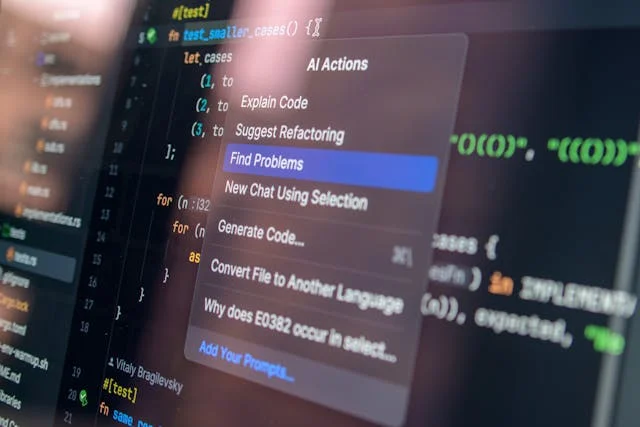
AI coding agents have completely transformed software development. In 2026, over 85% of developers regularly use AI tools — but understanding the difference between simple code suggestion tools and real autonomous AI agents is crucial. In this guide, we cover the best AI agents for coding, compare them, and help you choose the right agent for your needs.
What Is an AI Coding Agent?
An AI coding agent is an autonomous AI system that does the actual work instead of just suggesting code. It understands your goal, creates a plan, edits files, runs tests, and fixes bugs — without you sitting over every step. To understand the deeper cognitive architecture behind these agents, read our detailed guide on What Is Agentic AI and How It Works: Memory Systems Deep Dive.
🤖 AI Assistant
- Suggests code
- You copy-paste
- Works on single file
- You decide what to do
- Example: GitHub Copilot (basic)
🚀 AI Agent
- Executes tasks autonomously
- Handles multi-file changes
- Runs tests and iterates
- Opens pull requests itself
- Example: Claude Code, Devin
Why Are AI Coding Agents So Important in 2026?
The speed and complexity of software development are both increasing. Teams need to deliver faster, and AI agents are filling this gap. It’s no longer just about autocomplete — these tools can now autonomously build entire features. Beyond coding, AI is also transforming how we interact with technology through voice — see our coverage on 7 Best AI Voice Agent Platforms Compared for Business Growth to understand the broader agent ecosystem.
A major milestone came in February 2026: Grok Build, Windsurf, Claude Code, Codex CLI, and Devin — all shipped multi-agent features within the same 2-week window. Now parallel agents — meaning multiple agents working on different parts of the codebase simultaneously — have become an industry standard.
Best AI Agents for Coding — Top 6 Reviewed
We tested 15+ tools, gathered feedback from developer communities, and reviewed real-world benchmarks. Here are the top 6 best AI coding agents of 2026:
Claude Code
Anthropic’s terminal-native agent. It has the deepest reasoning and handles the hardest problems. The 200K context window means the entire codebase fits in memory. Scored 80.9% on SWE-bench Verified — the highest.
Best for: Complex architecture, multi-file refactoring, hard bugs
Cursor
A VS Code fork with AI fully built-in. Agent mode handles multi-file changes. The February 2026 update allows 8 parallel agents to run simultaneously through git worktrees.
Best for: IDE-first developers, polished workflow
Windsurf
The first “agentic IDE.” $15/month for 5 parallel agents. More affordable than Cursor with predictable billing. Growing rapidly in the developer community.
Best for: Budget-conscious teams, agentic IDE experience
GitHub Copilot
Used by 15 million developers. In February 2026, Claude and Codex model access was added to all plans. Copilot Workspace works directly from GitHub issues.
Best for: GitHub-first teams, beginners
Devin
Cognition’s flagship agent. Handles end-to-end tasks like “Add authentication to our app.” 67% PR merge rate on defined tasks. Enterprise-grade autonomy.
Best for: Enterprise teams, autonomous complex tasks
Cline (formerly Claude Dev)
5 million installs, zero markup. BYOM (Bring Your Own Model) — use your own API key, from Sonnet to Opus. Full control, no vendor lock-in.
Best for: Developers who want full control
Full Comparison Table — Best AI Coding Agents 2026
| Agent | Type | SWE-bench Score | Multi-Agent | Context Window | Best Use Case | Price |
|---|---|---|---|---|---|---|
| Claude Code | Terminal Agent | 80.9% ✓ | ✓ Yes | 200K tokens | Complex reasoning, large repos | $100–200/mo |
| Cursor | AI-native IDE | ~75%+ ✓ | ✓ 8 agents | Large | IDE-first teams | $20–40/mo |
| Windsurf | Agentic IDE | ~ Good | ✓ 5 agents | Large | Value-focused teams | $15/mo |
| GitHub Copilot | IDE + Workspace | ~ Medium | ~ Partial | Medium | GitHub-integrated teams | Free / $10/mo |
| Devin | Autonomous Agent | 67% PR merge | ✓ Yes | Large | Enterprise, complex tasks | $500/mo |
| Cline | VS Code Plugin | Model-dependent | ✗ No | Model-dependent | BYOM power users | Free |
| Amazon Q | AWS IDE Agent | ~ AWS-focused | ~ Partial | Medium | AWS-heavy projects | Free / $19/mo |
AI Agent vs AI Assistant: What’s the Difference?
This confusion is very common. Both tools are helpful, but their roles are completely different:
In the real world, the best results come when both layers are used. Editor assistant for fast writing, agent for complex refactoring and feature building. In 2026, winning teams layer both tools — they don’t replace one with the other. The agentic AI revolution isn’t limited to coding either — wearable devices are now shipping with embedded AI agent capabilities. Learn more at Wearable AI Technology Trends Experts Overlook in 2026.
How to Choose the Right AI Coding Agent for You?
Every developer’s workflow is different. Check these 4 main factors when deciding:
💰 Cost vs Output
The #1 topic in developer forums: “Which tool won’t torch my credits?” Claude Sonnet 4.6 through Cline/Kilo Code costs roughly $3–8/hour under heavy usage. Set your budget first, then choose your tool.
🔒 Privacy & Security
Is your company comfortable sending code to the cloud? If not, self-hosted or BYOM tools are better. Some companies completely block cloud-based agents due to IP concerns.
🎯 Use Case Match
Copilot is enough for simple autocomplete. Claude Code or Cursor for complex multi-file architecture. Devin for full autonomy on enterprise tasks. Playcode Agent for web apps.
⚙️ Workflow Fit
Work in the terminal? Claude Code. Prefer an IDE? Cursor or Windsurf. GitHub-first team? Copilot Workspace. AWS heavy? Amazon Q. Syncing with your stack is crucial.
The Evolution of AI Coding Agents — From 2020 to 2026
The first mainstream AI coding tool. Autocomplete-level assistance, a revolution in the developer community. It was just code suggestions — no agentic behavior.
Cognition introduced Devin — the first truly autonomous coding agent. Cursor shipped Composer mode. The agentic coding era began.
Anthropic launched Claude Code — terminal-native, 200K context window. SWE-bench benchmarks made model quality measurable. For a deeper understanding of how these agents think and remember, see our Agentic AI Memory Systems Deep Dive.
Grok Build (8 agents), Windsurf (5 parallel agents), Claude Code Agent Teams, Codex CLI — all shipped multi-agent features within the same 2-week window. Parallel agents became an industry standard.
42% of new code is AI-assisted. Gartner predicts 40% of enterprise apps will have AI agents by end of 2026. The developer role is shifting: from code writer to architectural guide.
Frequently Asked Questions — Best AI Agents for Coding
Conclusion — Which AI Coding Agent Is Right for You?
In 2026, AI coding agents are not just hype — they have become real developer infrastructure. 42% of new code is AI-assisted, and this number is growing. But one important truth: there is no single “best” agent — the right agent is the one that fits your workflow, stack, and budget.
Mostly complex projects? Claude Code.
Prefer working in IDE? Cursor or Windsurf.
GitHub-first team? GitHub Copilot Workspace.
Tight budget? Cline + your own API key.
Choose any one tool, use it on real projects for 3–4 weeks, and honestly evaluate your actual output. AI agents deliver the best results when developers guide them — not replace them. Use them, learn from them, and unlock your productivity.
For more tech, AI, and software content, visit Cambrotvtech.com — your hub for everything tech. Also explore our AI & Machine Learning and Cloud & Software Tools sections for more in-depth guides.
About the Author